McDowell Technical Community College is strengthening its commitment to career-connected education by expanding apprenticeship and work-based learning opportunities for students and employers, while implementing new technology to enhance the efficiency, growth, and long-term impact of these programs.

The college recently became the first community college in North Carolina to implement the Craft Connect platform, an innovative system designed to improve the management, tracking, and coordination of apprenticeship and work-based learning experiences. The platform was recommended by Charlie Milling, Community College Apprenticeship Representative for the region, as a forward-thinking solution to support program growth and continuous improvement.
While the new system represents a significant operational advancement, college leaders emphasize that the technology is part of a broader strategy focused on expanding opportunities for students to gain real-world experience and for local employers to develop a skilled workforce.
“Work-based learning and apprenticeships are among the most powerful ways we connect education to employment,” said Dr. J.W. Kelley, President of McDowell Technical Community College. “Our goal is to make these opportunities more accessible, more efficient, and more impactful for both students and employers. The implementation of Craft is one example of how we are continuously improving our processes so we can serve our community even more effectively.”
Expanding Apprenticeship Pathways
McDowell Technical Community College partners with local and regional employers to offer Registered Apprenticeship programs that combine paid, on-the-job training with related classroom instruction. Apprentices earn a wage while learning in high-demand fields and work toward industry-recognized credentials and college credit.
Apprenticeships are currently available in a variety of career areas, including advanced manufacturing, healthcare, skilled trades, business, and other workforce sectors identified by local employers. These programs allow businesses to develop talent tailored to their specific needs while providing students with a clear pathway to stable, well-paying careers.
Registered Apprenticeship programs are recognized by the U.S. Department of Labor and offer benefits to both participants and employers, including reduced turnover, increased productivity, and the development of a sustainable workforce pipeline.
Work-Based Learning Across Career Programs
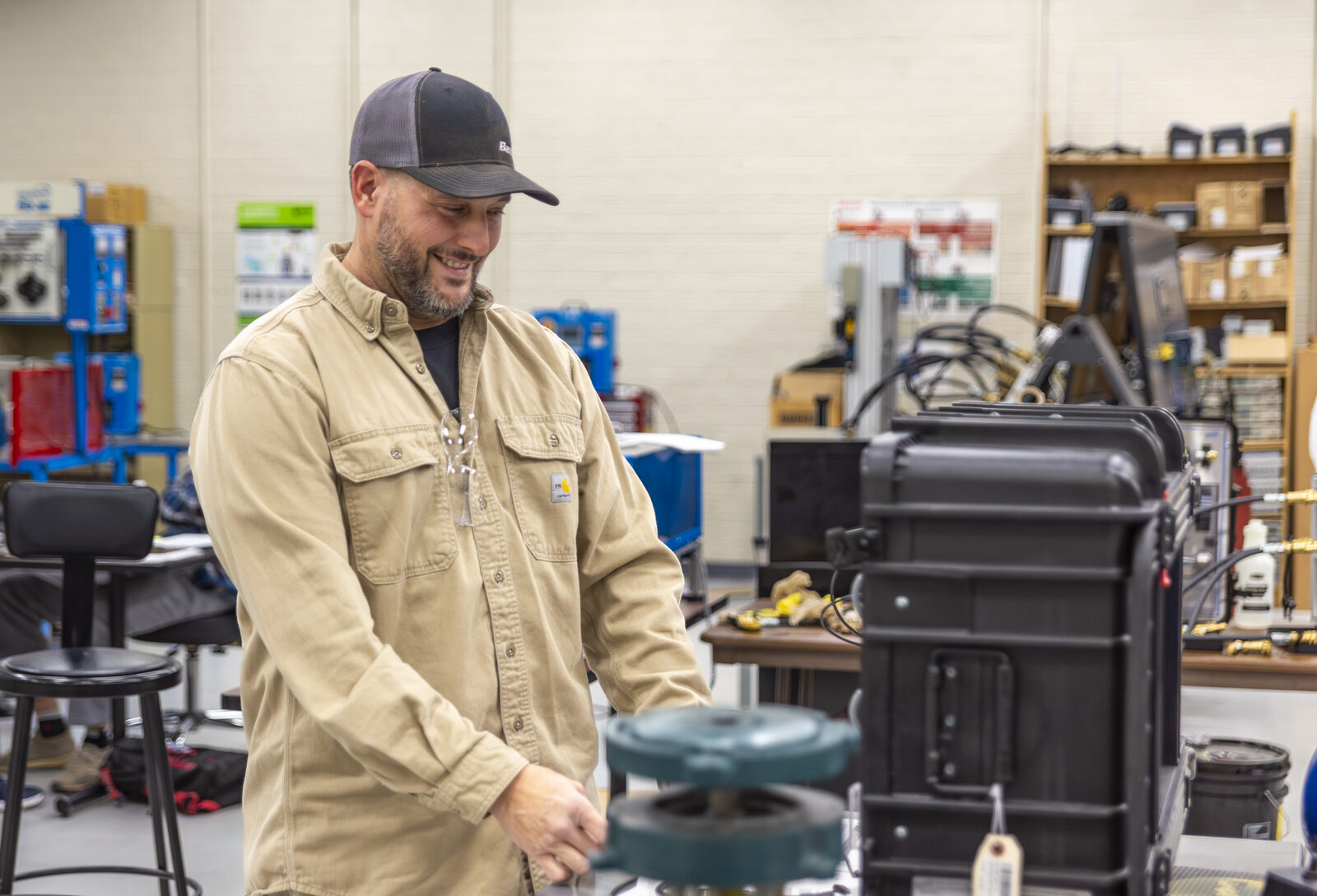
In addition to formal apprenticeships, the college offers a wide range of work-based learning (WBL) opportunities integrated into many curriculum programs. These experiences allow students to apply classroom knowledge in real workplace settings through internships, cooperative education, clinical placements, practicums, and other supervised employment experiences.
Work-based learning helps students build professional skills, explore career options, and gain experience that enhances employability after graduation. Employers benefit by connecting with motivated students, evaluating potential future employees, and strengthening partnerships with the college.
Annie Duncan, Coordinator of Work-Based Learning and Apprenticeships and Work-Based Learning Instructor, works closely with faculty, students, and employer partners to coordinate placements and ensure that each experience supports both academic and workforce goals.
“Our work-based learning and apprenticeship programs give students the opportunity to learn by doing,” Duncan said. “These experiences build confidence, strengthen technical and professional skills, and help students transition smoothly into the workforce.”
Continuous Improvement Through Innovation
As participation in apprenticeship and work-based learning programs continues to grow, the college has prioritized improving the systems that support students, employers, and faculty.
The Craft Connect platform provides a centralized system to track on-the-job training hours, related instruction, competency development, and employer evaluations. By replacing manual processes and multiple spreadsheets, the system reduces administrative workload, improves communication among partners, and provides real-time data to support program oversight and expansion.
Craft Education is a nonprofit workforce technology organization that helps colleges, employers, and workforce agencies design and scale apprenticeship and work-based learning programs. The platform supports U.S. Department of Labor Registered Apprenticeship requirements and provides robust reporting tools for performance tracking and grant compliance. The core system is provided to education partners at no cost, resulting in both time savings and direct cost efficiencies for the college.
“Craft will allow our team to spend less time managing paperwork and more time supporting students and employers,” said Stacy Buff, Vice President of Workforce Development. “The platform improves communication, streamlines reporting, and gives us the data we need to grow these programs strategically. Most importantly, it helps us expand opportunities for students to learn while they earn.”
The system provides role-based access for students, instructors, employers, and administrators, allowing all partners to monitor progress, document skill development, and communicate efficiently throughout the training experience.
Supporting Workforce and Economic Development
McDowell Technical Community College’s apprenticeship and work-based learning programs play a vital role in the region’s economic development by aligning education with workforce needs. These programs help local businesses address workforce challenges while providing residents with pathways to meaningful employment and career advancement.
“Employers are looking for skilled workers, and students are looking for clear pathways to good careers,” Kelley said. “By expanding work-based learning and apprenticeships and investing in tools that strengthen these programs, we are helping both succeed—right where our community needs it most.”
For more information about apprenticeship or work-based learning opportunities at McDowell Technical Community College, visit www.mcdowelltech.edu/apprenticeship or www.mcdowelltech.edu/wbl, or contact the Workforce Development Office at 828-659-0497.